
I’ve always been a voracious reader, and I will read any genre if the story appeals to me, but romance has always had a very large part of my heart. I love romance books: I love the vulnerability, the authenticity, and the exploration of human connection.
It’s no secret that the romance genre gets a lot of flak from basically everyone who isn’t a fan of it. As a long-time romance reader and a romance author with over 10+ years of indie publishing, I can’t tell you how many times I have faced the snide, offhand remarks from people about how “romance books just aren’t that serious”.
That being said, the supposed “literary merit” of the romance genre has long been a discussion in literary circles for as long as there have been literary circles and romance books–and the patriarchy plays a major role in trying to demean the genre.
There’s a lot of evidence that points to the fact that out-right hatred of the genre is rooted in misogyny.
Misogyny: noun; hatred of, aversion to, or prejudice against women. Also: something (such as speech or behaviour) that reflects and fosters misogyny. Example: saying “romance books are trash”. (dictionary.com)
The romance genre has been marketed as “by women, for women”. All genders do, in fact, read and write romance. But most romance author names–whether pen names or not–are designed as :feminine:, The research is not available to prove whether “by women for women” is the genre living up to the label or not, but my personal experience as an author and reader of romance is that the genre is by people, for people.
Romance sells well enough that the top selling titles are easily recognizable. Heck, everyone’s heard of Harlequin and knows exactly what kind of books they publish. It’s instantly recognizable because it’s popular. It’s easy to see why parallels have been drawn between misogyny and hatred of the romance genre, especially when you look at how people talk about it.
It’s only 21 days into 2025, and already…we’ve had a large social media influencer shame romance books and romance readers with their whole chest. I can’t recall a time when a large social media influencer has made a video bashing books in other genres, or telling mystery genre lovers to “go touch grass” and “seek therapy”, but alas…it’s pretty common for the romance genre and readers to receive such treatment. Romance authors and romance readers tend to be the butt of the joke more often than not.
It’s pretty much the only genre to face such a weird…reaction (rejection, hate, disdain). I mean, we all know fictional books are, well, fictional, and we don’t scoff about how “unserious” other genres can be. And really, at the end of the day…the romance genre is one of the most serious of genres, as it explores what it means to be human. It’s also provocative…and for more than just the explicit scenes.
The biggest provocation the romance genre incites is anger in the manosphere, because the romance genre is a rebellion against the patriarchy. It seems that misogynistic men are so threatened by fictional men in romance stories that they go to great lengths to demean and minimize the genre as a whole. Ask me how I know: well, anytime I post about writing romance or mention the misogynistic attitudes toward it, I’m inundated with angry comments attacking me and the romance genre as a whole. One can’t help but wonder if their angry shouts are to appease their fragile egos and allow for their beloved patriarchy to continue.
The cold hard truth is that romance isn’t the fluff or non-literary work that the patriarchy wants everyone to think it is. Romance books aren’t just about people getting it on: they are about human rights. Can they be fun and entertaining? Of course, but when you ask any author why they wrote a certain book, there’s a real life reason. They had a story to tell, a lesson to impart on the reader–romance is no different.
In my writing, I explore grief and found family, as well as my own disability. A major recurring theme in my work is mental health and human rights. The ability to choose what you want for yourself. Consent plays a huge role in my writing too.
I learned something interesting recently…that when you point out in a public place (ahem: on social media) that hatred of the romance genre is rooted in misogyny, you will inadvertently end up with a bunch of angry men (and yes, sometimes women) yelling at you about how that’s absolute bullshit, and it’s perfectly fine to hate romance.
While it is perfectly fine to have reading preferences, what’s not so fine is the hatred behind it–that’s where the misogyny comes into play. Nobody bats an eye at a fantasy novel loaded with explicit scenes, but if a novel crosses the boundary and has explicit scenes that are also romantic in nature? Well, stop the presses!
Personally, I think we need romance books more than ever these days. We need books that depict healthy, thriving relationships–not just between the central characters, but between the friends and communities featured. We need more love in this world, not less. We need to embrace vulnerability and authenticity. We need hope.
And we really need to stop feeding into the misogynistic idea that “emotional fulfillment is weak”. I think if more people felt emotionally fulfilled, there would be less anger in the world in general. People would feel happier and more connected to one another, and I fail to see how that’s a bad thing.
More About The Author:
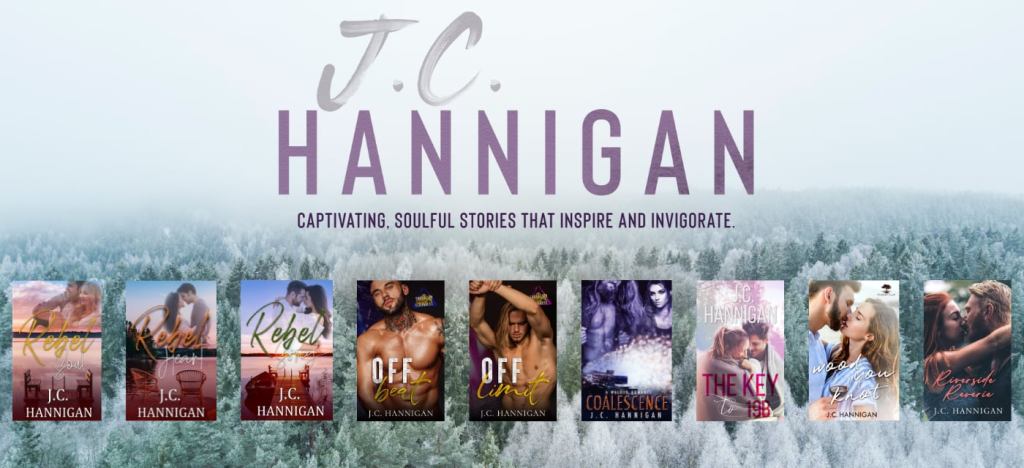
Ever since she was a little girl, J.C. has had an unquenchable thirst for reading. Historical fiction, romance, fantasy, thrillers and horror; it didn’t matter the genre, she’d read anything once.
Eventually, that love for reading grew into a love for writing, and she learned that sharing her stories was every bit as therapeutic as escaping in them.
Born with a chronic pain bone disorder called Multiple Hereditary Exostoses, J.C. turned to writing to keep her company amid a world of surgeries, bad pain days, and isolation.
She started a blog when she was 15 chronicling the challenges of high school, dating, and coping with a chronic pain disorder. She completed her debut novel, COLLIDE, in 2013, and published it in 2014. To date, J.C. has published 15 novels.
Through her writing, J.C. hopes to bring awareness to mental health, rare diseases, and social challenges. Her writing has been described as edgy, bold, poignant, and raw.
J.C. currently resides in a small town in Ontario with her husband, their sons, and their dogs. Other hobbies of J.C.’s include swimming, camping, and daydreaming of traveling around the world.
Where To Find J.C.:
Website: https://www.jchannigan.com/
Instagram: https://www.instagram.com/authorjchannigan
Threads: https://www.threads.net/@authorjchannigan
Facebook: https://www.facebook.com/authorjchannigan
TikTok: https://www.tiktok.com/@authorjchannigan
BlueSky: https://bsky.app/profile/authorjchannigan.bsky.social
Newsletter: https://jchannigan.myflodesk.com/g343nxhzay
 HEA Canada: A CanLit Romance Hub